


The world of book publishing is wide and varied, and writers in the world likely hear advice for publication geared towards securing a contract with the “Big Five” or smaller publishers who operate within the same model.
In this day and age, generally speaking, publishers look for a strong social media, newsletter/email list, or Substack following. That communicates to the publisher that the author has a steady audience, and therefore, a network of people to whom and through whom the book could be sold. Authors present, in their query, pitching the book to the publisher, how they plan to connect and market to that network in order to increase book sales. There are ways publishers help with the distribution and marketing, but in that sphere, the bigness of the company begins to take command.
Without regular newspaper and magazine publications printing critical reviews, most of the book recommendations out there are written by friends, people in the network, or those who suspected this would be a good book based on its author or contents, and requested a review copy. A good following can lead to good reviews which leads to more sales.
It can be disheartening as the online world remains saturated with writers of all stripes; the slices of pie grow smaller and smaller, it is harder and harder for people to make it good while keeping it meaningful.
Publishers analyze the cost and reward of taking on a new author. They provide an “advance” of money to be earned against later royalties, once-upon-a-time meant to support the writer while he or she writes the book. As the book sells, it earns royalties, a little piece of profit for the author. Earning against royalties means that until the advance amount is earned, the author will see no additional profit. If it never earns that advance, the publisher eats the loss. The author may have a hard time getting published again unless the work specifically captures the attention of an acquisition editor.
It is the voice of the acquisitions editor that lobbies for a particular work to be published.
When I was introduced to the acquisitions editor at Our Sunday Visitor, the books I pitched appealed to her and would contribute to the growing library of books published by Our Sunday Visitor that spiritually and emotionally support women, particularly mothers, at all stages of parenting. We worked together to give shape to the books in question. Journey in Love and Peace in Pregnancy were the products of that collaboration.
It is very much a collaborative process. And it is in that collaboration that we can see beyond the numbers- those disheartening numbers (!) that measure us only with big units, missing the nuances of the work we small folk can do.
So, you can imagine, when I sat down with Erik Anderson, Senior Acquisitions Editor at University of Minnesota Press, to talk about the process of publishing the new translation of Olav Audunssøn, how encouraging it was to hear about the collaborative process, the trusting relationship between editor and translator, the desire to publish good literature, and a business mission to look beyond passing trends to things of lasting value.
The beginning of a beautiful relationship

University of Minnesota Press had already worked with Tiina Nunnally on a dozen books beginning around 2012 with translating a series of Norwegian crime novels.
As an editor creates relationships with authors and translators, the things that fascinate them find the editor and the things that fascinate the editor find them, Anderson explained. “I was aware of her work and interest. There were conversations along the way; we would throw around ideas, talk about things she always wanted to translate.”
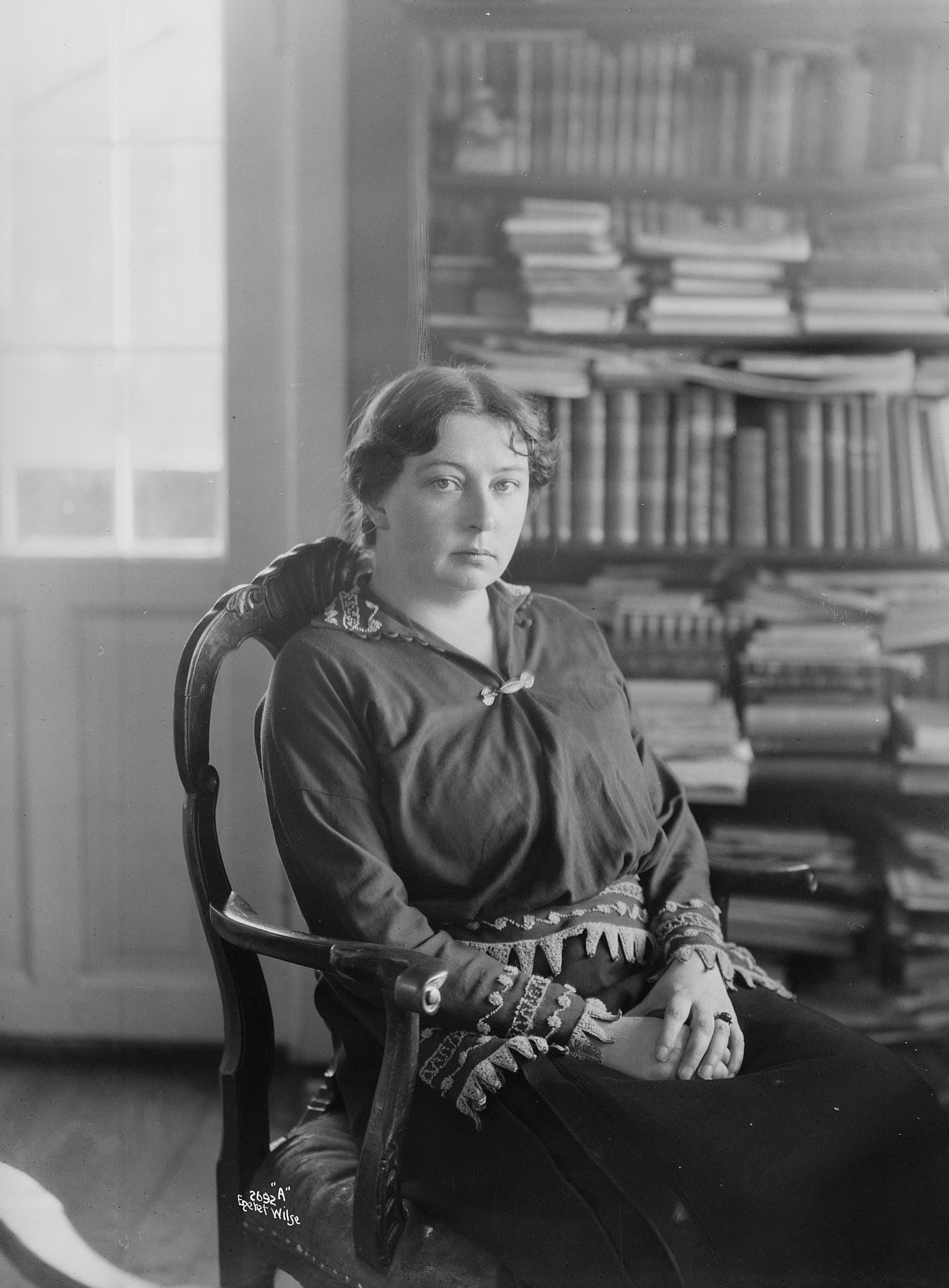
Nunnally, who translated Undset’s most famous work, Kristin Lavransdatter (2000), told Anderson she had an unpublished translation of the first novel of the Nobel Prize-winner Sigrid Undset, Marta Oulie, never before translated into English. In 2014, University of Minnesota Press published her translation.
When it came to Olav Audunssøn, “Having translated her other big medieval work, it loomed as something Tiina had wanted to do,” Anderson said. Nunnally approached him with the idea of translating Olav, and said this seemed the right window to do it. “Translators are often juggling so many works; where and how do you fit things in?” The time became right for Tiina to take on Undset’s other big work. “We were thrilled,” Anderson said. “It began relationally. We leapt at it together in that.”
Writing for so many future generations
“But with publishing working the way it does, how does University of Minnesota Press weigh the investment of a project like this?” I asked.
“As a publisher, we’re a nonprofit, mission-based pub that just turned 100 years old last year. We’ve always been, as a press, dedicated and devoted to scholarship and intellectual pursuit. Meeting readers, it was clear to us that this was so due for a new translation,” Anderson said.
The original translations of Kristin and Olav were intentionally translated in an archaic style, perhaps to give it that old-world feel for English-speaking audiences, but Undset’s originally Norwegian was far from that. According to Nunnally, Undset’s writing is direct, crisp, clear and concise, poetic but powerfully-so in its elegant simplicity. This was lost, sometimes violently so, in Kristin. While the Olav translation did not muddy the language nearly as much, the “crystal clarity” was lacking. It is the art of the translator to bring that about, by finding the space in which the voice of the original can meet the modern ear.
“As an editor, you’re doing this remarkable double step through time; you’re trying to bring forward Undset’s voice and writing from the 20s, but Undset is also doing the work of painting 13th-century Norway. You bring it all to a reader today and the decades going forward.”
Anderson said. “We often think a book of new translation meets a reader a couple years after it’s published. But how long, for those original Kristin and Marta, were those the translations of record? For over half a century. You’re writing for so many future generations.”
He said, as a press, University of Minnesota Press likes to publish big things. “We enjoy big projects that feel monumental, that feel important. The value was multifaceted and primarily had to do with the feeling that this if her masterwork.”
“A book of this magnitude, translators should have a version that reflects Undset’s genius as cleanly as possible to her original intent and voice, and who better to do it than Tiina? And when the time was right, it wasn’t a question of where the value is. We trust our people. I, as an editor, I follow the instincts and the aspirations of the gut of the writers that I work with,” he said. “It was a no-brainer.”
There were other elements, of course. As a publisher, University of Minnesota Press looks to preserve and promote works of Scandinavia. It was also a matter of “building out the knowledge and putting more in the world for those who study Scandinavian literature of this time, Scandinavian literature in translation. All the reasons people come to a writer like Undset, are wide and varied. It builds into a broader area of publishing.”
When I told him our library refused to stock more works by Sigrid Undset through the ZIP books program, and that I was told university students read Undset, not patrons of the public library, he was surprised.
“It’s always amazing at the variety of directions from which I see people become fascinated by Undset,” Anderson said.
They may be medievalists, fans of think this ought to be the next “Game of Thrones,” readers who read her for the spiritual/Catholic aspects of the writing, or people who just love good writing. “What’s always captivated me about Undset, I can’t get enough of Undset’s ability to write with such emotional and psychological depth and spiritual depth; it transcends any question of the what and where and why. Any writer that plumbs such profound character depth at such length and a lifetime length, it’s a profound thing to experience, regardless of your background,” he said.
Undset writes so rawly for that for people who love a tremendously painted world,” Anderson described it as “embodied.”

He told me of a reader who picked up Undset during the days of the pandemic. “I was living in a time that made me feel disconnected from my body; reading Sigrid Undset put me back,” the reader told him. For Anderson, “I’ve barely seen mountains in my life; I’m obsessed with mountains just from reading, because of the way she paints those worlds.”

The appreciation for Undset is also generational. “I know other authors who came to their love for her by their parents pressing the book in their hand.” One mother advised another, give her the book when she was 15; and tell her to read this every ten years because it will tell you something different as a woman. “She has now read it six times, and her mother wasn’t wrong.”
There is not just one audience for a great author, including a great author like Sigrid Undset. We have a Western literary canon of classic literature that often lacks the presence of female writers. Is it because they are female?
Is it because of language barriers, that Undset’s work has just not made it into her rightful place in the canon?
“That fascination comes from every direction, not just one vantage point in the world, generational, geographic,” Anderson said. “It’s not just the beauty but the profound connection that she makes to her characters.” A good translations brings this living within the “the space within the gift of a writer, the directness, crystal clarity of her word choice, the psychological depth, internal turmoil, what it means to live authentically, in a world that often makes that hard – and her characters are so often battling in that space – a good translation refines that transparency through the high wire act that Undset does.”
“We’re well beyond trends here. These sagas have never gone out of print.”
If you haven’t read Sigrid Undset yet, give her a try. It will be a long read, but a beautiful one. The personalities in her works are strong, and some of them ma drive you crazy, but it’s an entire cast of characters that live within these works, so like life, you’re likely to find one with whom you can relate.
You may read it within a few weeks; or it may take a year. Do not let the size intimidate you; just start small, one chapter at a time, and let the work unfold before you.
When discussing Undset’s work, we have her Medieval works and modern works, set in the time in which she lived.
You can find Marta Oulie (modern) and Olav Audunssøn for sale at the University of Minnesota Press (as well as other major booksellers). The Nunnally translation of Kristin Lavransdatter and, Undset’s modern and heartbreaking novel, Jenny is published by Penguin Books. (Please note: Jenny is a modern and heartbreaking novel, and this gripping translation includes some violence).
For Undset’s other modern novels, I recommend the editions (still in their original English translation) published by Cluny Media.