


Parking is at a premium when the work culture of downtown Modesto overlaps with the Friday night set. The crowd, willing to come early, mingles in the multi-floor lobby of the Gallo Center, while traffic accumulates outside. Some will wander in for the pre-opera talk given by Hillari DeSchane and Caleb Yanez Glickman. Others will wait for a covered plastic cup of wine or beer, wait for their guests, or wait for a different show altogether. Opera Modesto General Director Roy Stevens greets friends of the opera in a suit and pink tie, standing before a poster of a ballerina from Central West Ballet, also in pink. Artistic Director Analisa Winberg wears a black evening dress, to be accessorized with a gold shawl when she later greets the audience alongside Stevens to coach them in the participation sport that is opera.
Americans are more reserved at the opera, or any formal performance in which they wear high heels or suit jackets, unless it be Yanni or Taylor Swift. They come in a variety of fashions to Gallo Center. Come as you are, the website encourages, the best policy for the mixed culture that meets together for a common cause. In the front row, a young lady wears a backless evening dress; behind her, a man dresses in a Hawaiian shirt and khaki shorts. The music students who come don floor-length prom dresses and top hats. High and low fashion, just like the opera itself.
The pre-opera talk gives the political history of the author, Pierre Beaumarchais, whose play inspired the libretto. He was a watchmaker, inventor, musician, spy, publisher, arms dealer and revolutionary for the French and American revolutions. This opera is Italian, and sung so, with music by Gioachino Rossini and an Italian libretto by Cesare Sterbini.
As it begins, and frankly, as it finishes, I’m not sure I can pick out the revolutionary themes DeSchane points out. It takes us a while to get a full grasp of the story here. We did not do our homework, and the pre-opera talk did not give it away.
But Figaro is the man of many talents, as written by Beaumarchais. His role was lesser in the premiere, but enlarged following the audience’s reactions to that famous aria “Figaro! Figaro!” later sung by Bugs Bunny, and the comedy he brought to the stage. Leave the romantics to the tenor and soprano; the baritone is here for a laugh.
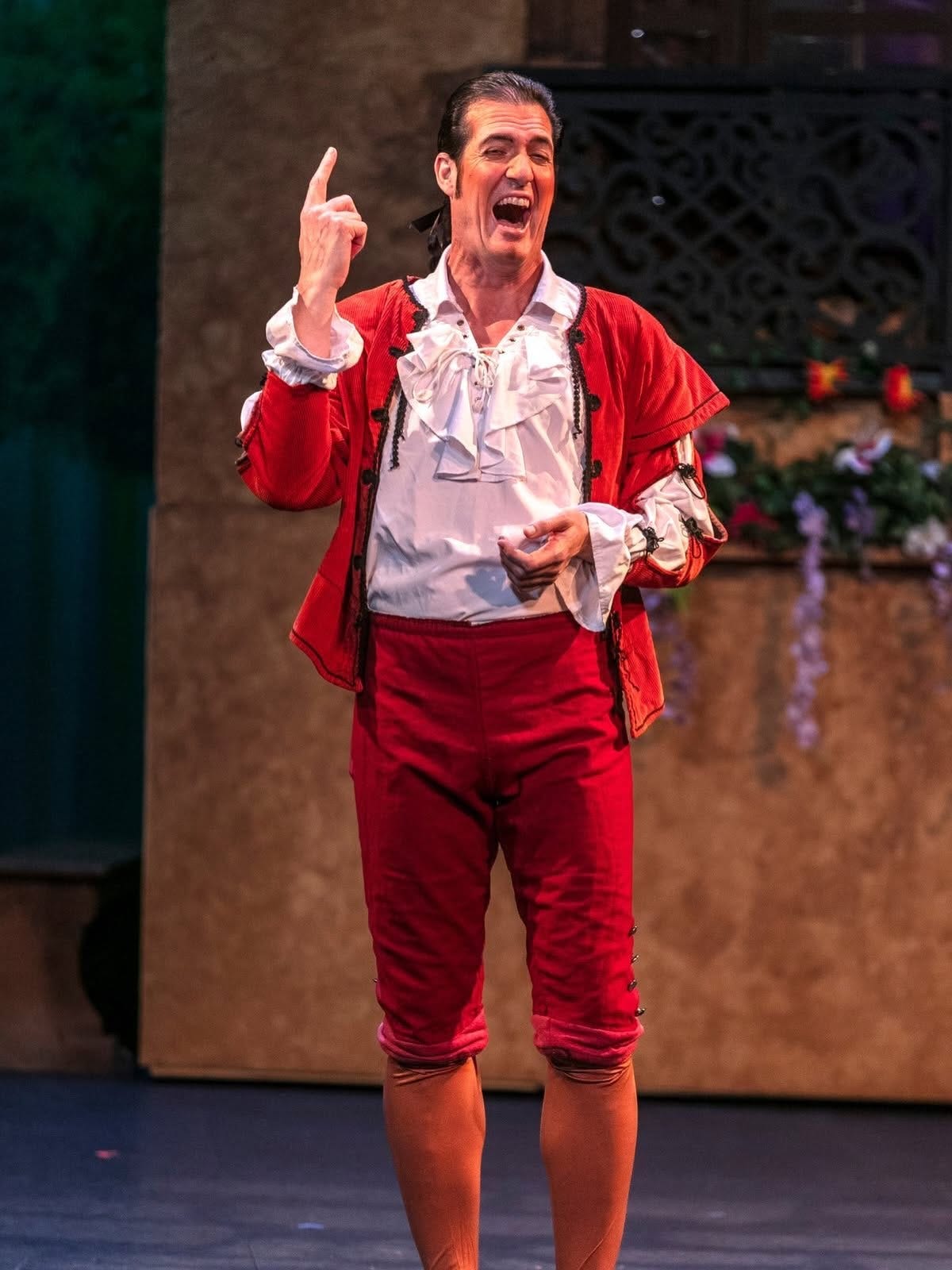
He seemed 7 feet tall, at least from where we were sitting. Gabriel Manro’s lanky presence high stepping it around the stage, peeking from behind curtains and causing a chaotic merriment, made it clear that opera buffa is a 1940s screwball comedy with love, and tender moments punctuated with a zaniness that leaves one simply sitting and laughing at its close.
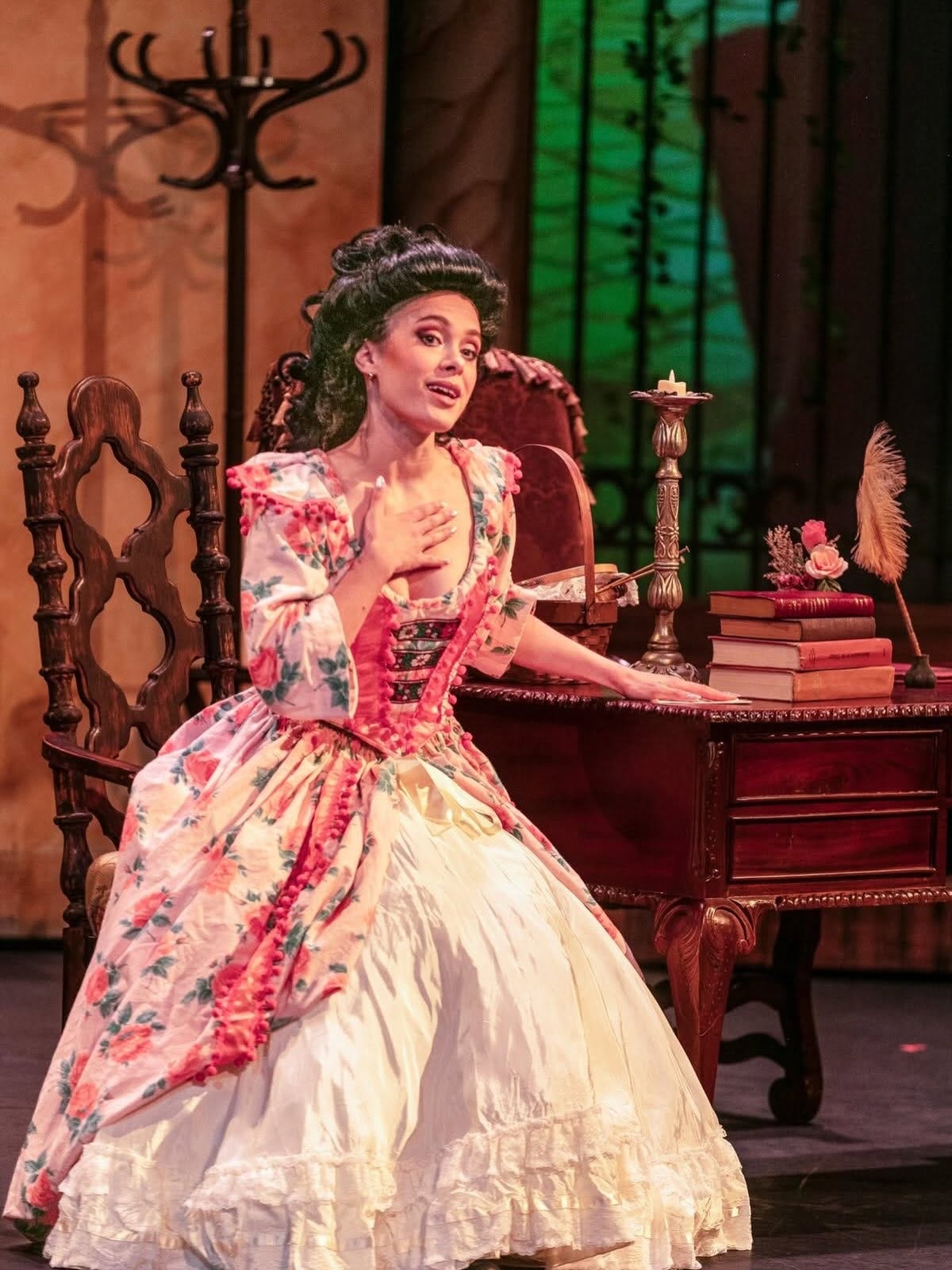
Alianis Lozada plays the love interest and wily plotter to get what she wants. Rosina is no passive maiden. She and tenor Chris Mosz plot and scheme to get together and escape the view of her guardian, played quite PG considering his stated intentions to marry her himself. This is a quality that Opera Modesto offers consistently. Not all operas have a family-friendly plot when spelled out, but the clean portrayal, still with humor, still telling the story straight, leaves the more complicated aspects above younger viewers’ heads, and stays movingly or comedically with those who catch the joke or problematic plot twist.
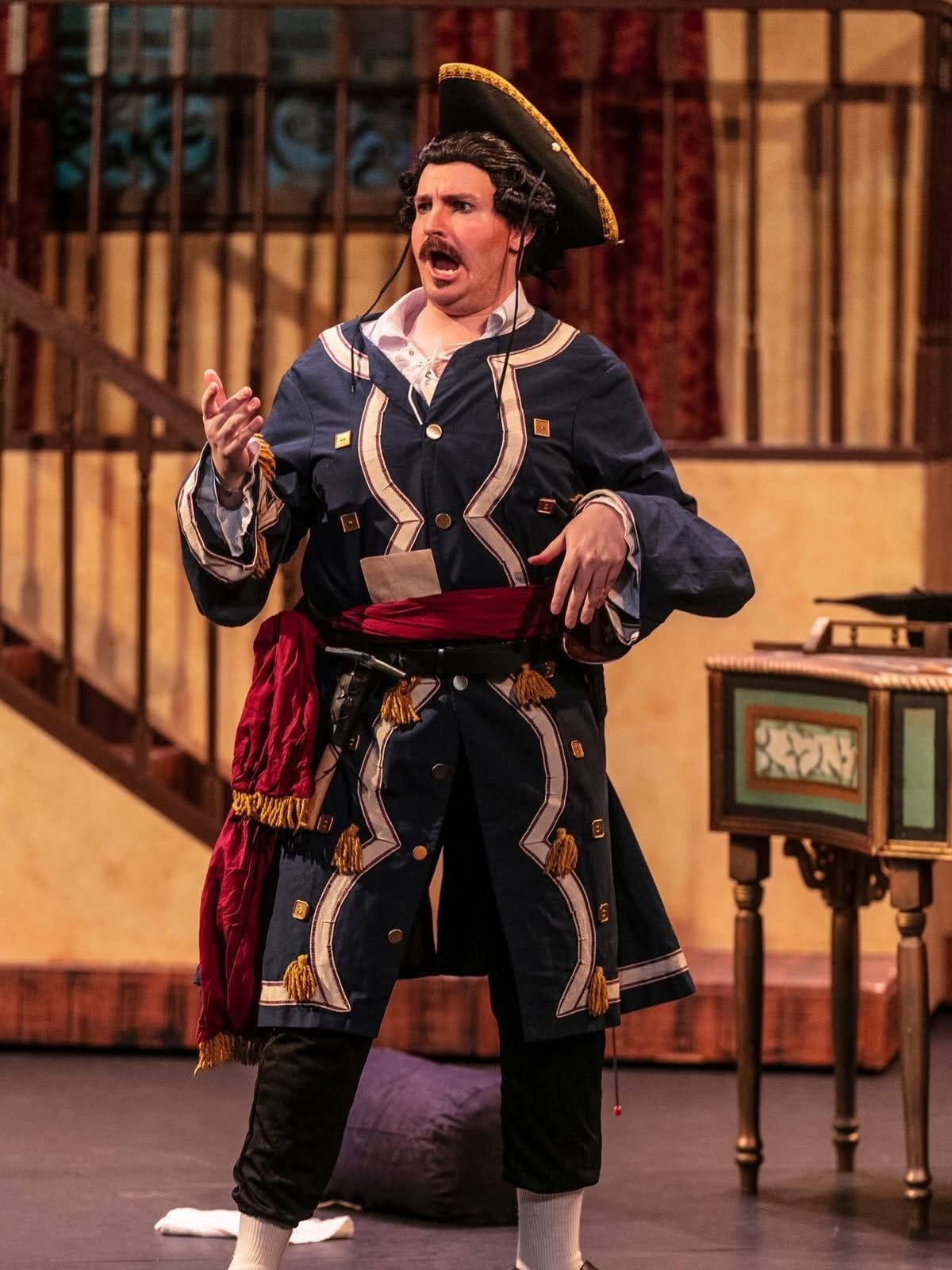
During the pre-opera talk, conductor Yanez Glickman told us about the storm scenes written into Rossini’s operas, composed for a specific cast and a specific opera house. The scenes were an opportunity to show off the special effects of the house, which included bowling balls rolling around above stage lanes to simulate a storm. Opera Modesto brings not the bowling ball, but the anvil and aluminum sheet for special effects, and keeps its more modern technology with graphic backdrops to a minimum, bringing it out best during the storm, like with that historic precedent offered in the talk. Otherwise, the staging was old-school with physical props, balconies, tables and chairs, a perfect match for a surprising physical opera sung in the Bel Canto style.
All in all, the night was a delight. After the spring’s passionate, tragic Rusalka sung in Czech, the Roman romp of The Barber of Seville shows the diversity both in the world of opera and on the stage with Opera Modesto.
The next opera will not be until January, when Opera Modesto performs The Little Prince at the State Theater as part of the Story into Song Literacy Initiatives. Classes that sign up to attend will receive a free curriculum companion (made by me!). Until then, there are three other operatic events: Songs of the Valley on Sept. 27, Season of Song: A holiday opera a la carte (fundraiser) at the McHenry Mansion (decorated for Christmas!) on Dec. 3, and the Around the World Concert 2026 on Dec. 13.
Originally published in the Hughson Chronicle & Denair Dispatch on Sept. 22, 2026. The Hughson Chronicle & Denair Dispatch is part of MidValley Publications and is committed to the power of the positive press. Reprinted with Permission.
The Hughson Chronicle & Denair Dispatch is a weekly, print-only local newspaper. To subscribe, call 209–358-5311.